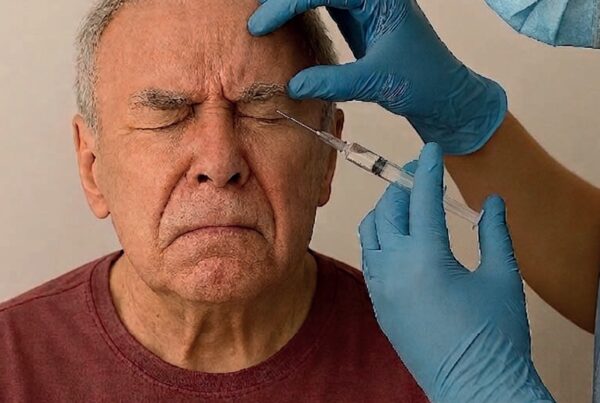

When Maggie’s husband Chris began experiencing unexplained falls, they knew something wasn’t right.
What followed was a journey familiar to far too many people affected by Progressive Supranuclear Palsy and Corticobasal Degeneration. Appointments with different specialists, conflicting opinions, long waits, and growing uncertainty. Parkinson’s disease was considered. Other conditions were explored and ruled out. Years passed before Chris finally received an accurate diagnosis of PSP.
By then, the condition had already changed their lives.
Chris and Maggie’s story isn’t unusual. It reflects the experiences of hundreds of people who took part in our latest survey. Behind every statistic is a person navigating a life-changing diagnosis, a family adapting to increasing care needs, and carers doing everything they can to support someone they love.
What follows is not a straightforward path to answers.
Instead, it’s a journey marked by uncertainty, frustration and, too often, years spent searching for the right diagnosis.
The findings from PSPA’s latest survey reveal a stark reality for people living with PSP & CBD and the carers who support them. Behind every number is a person, a family and a life changed forever.
The search for answers takes too long
For many people, getting an accurate diagnosis remains a significant challenge.
When symptoms first appear, they understandably turn to healthcare professionals for guidance and support.
Our survey found that 67% waited two years or more for an accurate diagnosis.
Even more concerning, 58% were initially misdiagnosed with another condition.
Imagine spending years knowing something is wrong, while symptoms continue to worsen and the answers remain out of reach.
A diagnosis doesn’t change the condition itself, but it provides some much-needed clarity. It allows people and families to understand what they are facing, access the right support and begin planning for the future.
When diagnosis is delayed or incorrect, precious time is lost, and the care and support required becomes hard to access.
Losing independence, one step at a time
Even after diagnosis, the impact on everyday life is profound.
9 in 10 people living with PSP & CBD told us they have experienced a loss of independence because of their condition.
Simple activities that were once routine, like getting dressed, preparing meals, going out independently, and maintaining social connections, can become increasingly difficult.
Yet, despite the complexity of these conditions, only 38% of people have a named healthcare professional coordinating their care.
A further 36% would like a care coordinator but do not have one.
For many families, this means navigating multiple services alone, repeating information to different professionals and trying to piece together support while coping with the uncertainty of an increasingly complex condition.
The burden extends far beyond physical symptoms
The impact of PSP & CBD isn’t limited to physical symptoms. It affects emotional wellbeing, confidence, relationships and financial security.
Our survey found that 60% of people living with PSP & CBD regularly experience depression, anxiety, frustration or stress related to their condition.
And along with the emotional toll comes growing financial pressure.
65% of respondents reported new costs related to their condition.
Whether it’s specialist equipment, home adaptations, travel to appointments or increased care costs, the financial impact can be quite significant. And families are ultimately managing these additional pressures while adjusting to a life that looks very different from the one they had planned.
More challenges at every step
PSP & CBD are progressive conditions, meaning needs increase over time.
The survey shows that the period between three and five years after diagnosis can be particularly difficult.
Among people diagnosed three to five years ago:
- 84% say the impact of PSP or CBD on their lives is severe.
- 75% say every day is challenging.
These findings highlight an important reality that support cannot remain the same throughout. As needs change, services must adapt too. Rather than anticipating the progression of the condition, very often, support arrives only when families have already reached crisis point.
The carers holding everything together
Behind many people living with PSP & CBD is a carer providing extraordinary levels of support and care, often at great personal cost.
Spouses, partners, children, siblings and friends often become advocates, coordinators and full-time carers, all while managing the emotional impact of watching someone they love live with a progressive, terminal condition.
Our survey found that 63% of carers spend 50 hours or more each week providing care.
That’s more than a full-time job.
And 75% of carers said caring has negatively affected their wellbeing.
Despite the vital role they play, nearly half (47%) have not received a Carers Assessment from their Local Authority.
These assessments provide crucial access to practical and emotional support that can help carers identify what assistance they may be entitled to receive. Without adequate support for carers, the pressure on families continues to grow.
A need for change
Together, all these statistics tell a powerful yet concerning story.
A story of delayed diagnosis, increasing dependence, and emotional, mental, and financial strain. It’s also a story of carers carrying immense responsibilities, often without the support they need.
But the good news is, all these offer plenty of opportunities for change, so people affected by PSP & CBD can hope for a better future.
A future when there is faster and more accurate diagnosis, better coordinated care, greater recognition of mental health needs, earlier support as conditions progress, and finally, stronger support for carers.
While these changes cannot alter the diagnosis, they can transform the experience of living with PSP & CBD. Based on the findings from the survey, we call for:
- Improving awareness of PSP & CBD, reducing delays in referrals and specialist reviews, improving access to specialist diagnostic expertise within the NHS, reducing reliance on private diagnosis pathways, and using diagnosis as an early intervention point.
- Ensuring health and care services reflect the full practical impact of PSP & CBD, improving access to therapies, aids, adaptations and symptom management, ensuring health and care services plan for increasing need over time, and improving professional knowledge of PSP & CBD across disciplines.
- Embedding mental health and emotional support in routine PSP & CBD care pathways, strengthening advice and support on benefits and entitlements, improving access to NHS Continuing Healthcare for people living with PSP & CBD.
- Introducing earlier planning, regular review of care needs and anticipatory care support, building stage-sensitive health and care services, urging services to pay particular attention to the middle years after diagnosis, and care planning to be designed to get ahead of crisis.
- Improving early access to Carers Assessments and signposting to entitlements and Carers Allowance, strengthening emotional and practical support for carers, ensuring support reflects differing experiences within the carer community, and treating carers as a core part of the care team.
Because behind every statistic is a person and a family trying to live as well as possible with a life-changing condition.
And every one of those people deserves better.
Visit the Survey Report page to read the key findings and download the full survey report.