
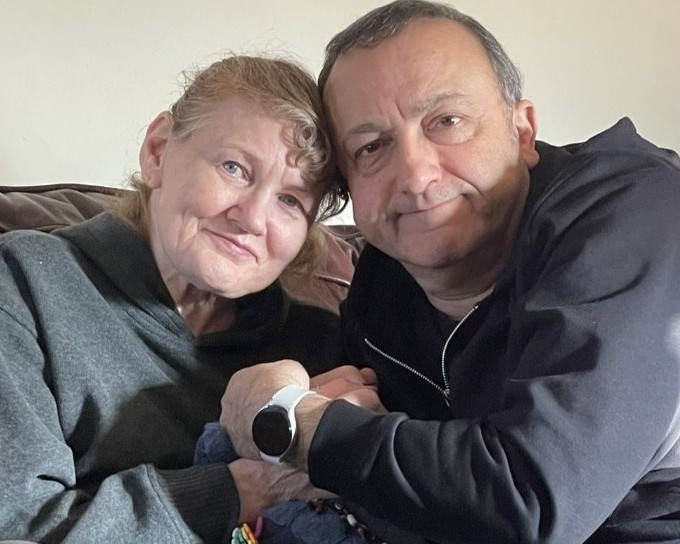
When someone you love is diagnosed with Progressive Supranuclear Palsy or Corticobasal Degeneration, life changes significantly.
Plans become uncertain. Familiar routines disappear. Conversations begin to revolve around appointments, medication, mobility and what tomorrow might bring.
For many families, one person quietly steps into a role they never expected to have.
They become a carer.
At first, it might mean driving to hospital appointments or helping with jobs around the house. But since PSP & CBD are progressive conditions, symptoms change, and so do the demands of caring, until the loved one becomes completely dependent on the carer for everything.
Our latest PSPA Survey, completed by 650 people living with PSP or CBD and their carers, shows just how much carers give every single day. It also highlights that while carers are at the heart of supporting someone with PSP or CBD, they often don’t receive the support they need themselves.
Caring becomes a way of life
Caring doesn’t stop at the end of the working day.
It doesn’t pause at weekends or wait until you’ve had a good night’s sleep.
For many carers, it becomes the rhythm of everyday life.
Our survey found that around two-thirds of carers spend more than 50 hours every week caring for someone with PSP or CBD, with many providing personal care for several hours each day.
Those hours aren’t just spent helping someone get dressed or preparing meals. They’re spent watching for changes, managing medication, helping prevent falls, speaking to healthcare professionals, organising appointments, and doing countless other jobs that are often never acknowledged.
It’s a role that demands patience, resilience and compassion every single day.
“We live in a remote village, so securing care support is incredibly difficult. Most families here look after their own. But I’m 75 years old with my own health problems; I simply cannot manage his care by myself.” – Violet Thomas (Her husband, Jackie, was diagnosed with PSP in 2025).
Living with constant change
Perhaps one of the hardest parts of caring is knowing that PSP & CBD won’t stop or slow down.
As the conditions progress, the person you know and love gradually needs more help. Tasks that once seemed simple become harder. New symptoms appear. Plans need to be changed again.
Our survey shows that caring becomes more demanding as time goes on. The number of hours carers provide increases, personal care becomes more hands-on, and many describe feeling increasingly overwhelmed and isolated.
No one can truly prepare for that.
Every family’s experience is different, but many carers describe feeling as though they’re constantly trying to stay one step ahead of a condition that remains uncertain.
The emotional weight that few people see
People often notice the practical side of caring.
What they don’t always see is the emotional weight that comes with it.
Watching someone gradually lose their independence is heartbreaking. Many carers are supporting the person they love while quietly grieving the life they shared before PSP or CBD.
It’s hardly surprising that more than half of carers who took part in our survey said they regularly feel emotionally overwhelmed or stressed. Many also described loneliness, isolation and the impact that caring has had on their own wellbeing.
Yet many carers tell us they simply keep going because they feel they have no other choice.
Trying to hold everything together
Many carers don’t just provide care at home.
They also become the person trying to make the health and social care system work.
They chase referrals, organise appointments, explain symptoms to different professionals and make sure everyone involved understands what is happening.
Our survey found that only around 38% of people affected by Progressive Supranuclear Palsy or Corticobasal Degeneration have a named care coordinator, while many families are left managing multiple services themselves. Around half of respondents also felt healthcare professionals were not well informed about PSP or CBD.
For carers, this often means repeating the same conversations over and over again, all while trying to support someone whose needs continue to grow.
It is naturally very exhausting.
“A lack of awareness among healthcare professionals is also frustrating at times. It can feel quite daunting, having to explain what is happening, what you need, and why, to people you usually would rely on to give you such answers.” – Maggie Chapman (Her husband Chris was diagnosed with PSP in 2021).
Support often comes too late
One of the clearest messages from our survey is that carers need support much earlier.
Too many families told us they hadn’t received a Carer’s Assessment during the first year after diagnosis. Others weren’t aware of NHS Continuing Healthcare until much later, when caring had already become incredibly demanding.
Support shouldn’t arrive only when families reach crisis point.
It should grow alongside the condition, helping carers prepare for what’s ahead instead of asking them to cope until they can no longer manage alone.
“I tried to cope alone for as long as possible, but the administrative mountain of securing equipment and benefits was exhausting.” – John Manitara (His wife Gillian was diagnosed with PSP in 2023)
The financial cost of caring
Alongside the emotional and physical demands, many carers are also facing increasing financial pressure.
Reduced working hours, specialist equipment, home adaptations and rising household costs all add up. Our survey found that around two-thirds of respondents reported new costs associated with PSP or CBD, while many families found it harder to manage financially.
Despite the significant commitment involved in caring, most carers were not receiving Carer’s Allowance or financial support linked to their caring role.
“Jim is largely confined to his bed. We have had the stress of self-funding this because his condition just seemed to fall under the care radar. To date, the cost of care has tallied up to around £120,000.” – Kate Harris (Her husband Jim was diagnosed with PSP & CBD in 2022).
Carers shouldn’t have to do it alone
Behind every statistic in our survey is often a partner helping their better half eat safely.
A daughter learning how to communicate when words become harder to find.
A family member lying awake at night worrying about tomorrow.
Carers are not simply supporting someone with PSP or CBD. They are helping people stay safe, remain at home for longer and live with dignity.
They deserve to be recognised, listened to and supported.
That’s why PSPA is calling for reform in the carer support system. We recommend:
- Improving early access to Carers Assessments and signposting to entitlements and Carers.
- Allowance, as well as regular reviews of carer needs, recognising that caring needs change significantly as PSP & CBD progress.
- Strengthening emotional and practical support for carers, including support for stress, isolation, resilience and the day-to-day demands of caring.
- Ensuring support reflects differing experiences within the carer community, including the heavier burden reported by many female carers and the particularly intense roles reported by some CBD carers.
- Treating carers as a core part of the care team, with recognition of the implications of caring for health, social care and the sustainability of support.
No one should have to face PSP or CBD alone.
And no carer should feel they have to carry the weight of caring on their own.
If you are struggling or need any support, please contact our Helpline on 0300 0110 122 and our team will try our best to get you the help you need.
Visit the PSPA Survey Report page to read all the key findings or download the full report.