Researching PSP & CBD with PSPA
Research is vital for improving the diagnosis, treatment and management of Progressive Supranuclear Palsy (PSP) and Corticobasal Degeneration (CBD), including Corticobasal Syndrome (CBS), all of which are rare, complex neurodegenerative diseases with no cure.
At PSPA, we are committed to funding and promoting PSP & CBD research to help improve the quality of life for everyone affected by Progressive Supranuclear Palsy (PSP) and Corticobasal Degeneration (CBD). As part of this, we are striving to create a better future where people living with PSP & CBD receive a quick and accurate diagnosis, immediate treatment and consistent care.
Research is central to achieving this. Together, we can improve diagnosis for the 10,000 people living with PSP & CBD in the UK. By working closely with researchers, clinicians and families affected by these conditions, we help drive forward studies that bring us greater understanding and closer to effective treatments.
Whether you’re a new investigator or an established academic, PSPA is here to support, collaborate, and fund CBD & PSP research that makes a difference.
Our Research Strategy
At PSPA, our research strategy is designed to address the most urgent needs of people affected by PSP, CBD or CBS. It sets out a clear framework to guide our funding decisions and partnerships, ensuring every research investment contributes meaningfully to improving lives today and in the future.
Our strategy was shaped through wide consultation with researchers, clinicians, people living with PSP & CBD, and their families. The strategy encompasses three key elements where funding will be focused:
- Diagnosis
- Treatment
- Care
These three key elements will be underpinned by our research values: involvement, collaboration, development, inclusion and communication.
The PSP Research Network is at the heart of our research efforts, bringing together leading centres across the UK to accelerate progress towards our strategic goals. As a proud member of the Association of Medical Research Charities (AMRC), PSPA ensures that all Progressive Supranuclear Palsy and Corticobasal Degeneration research we fund meets the highest scientific standards. This membership assures our supporters that their donations are helping to fund high-quality, meaningful research. Like all AMRC members, we follow strict guidelines on animal research. Our work is entirely funded by voluntary donations, which are crucial in the search for effective treatments.
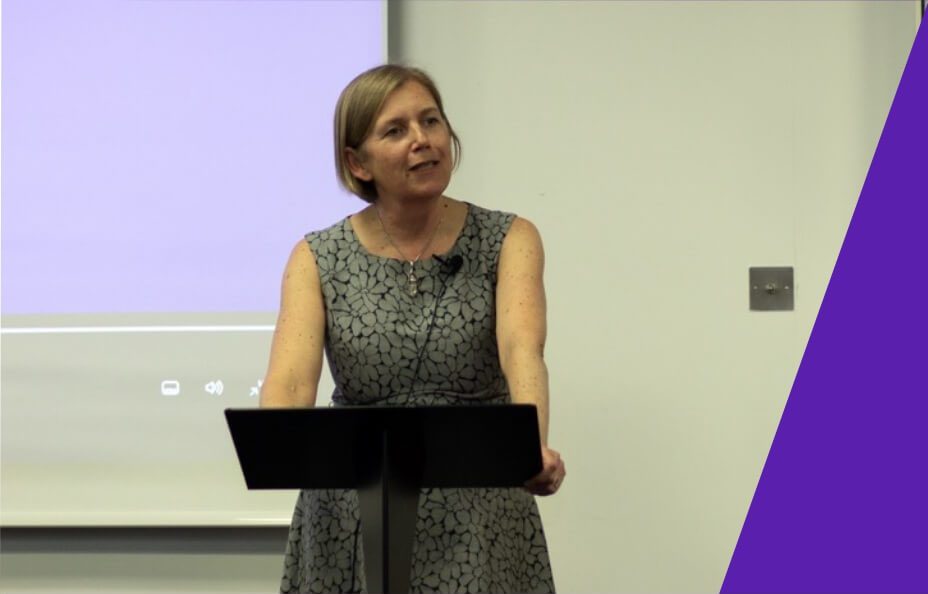
“An established network is helping to raise the profile of PSP & CBD research in the UK and set the scene for future investment.”
Rebecca Packwood, Chief Executive, PSPA
How We Fund CBD & PSP Research
At PSPA, we welcome research applications from a broad range of professionals who share our commitment. This includes academic researchers, allied health professionals, nurses, and neurologists. Whether you are based in a clinical setting, university, or research institute, if your work aligns with our goals, we encourage you to apply.
All funding decisions follow a robust and transparent process, in line with best practice guidance from the AMRC. This process includes:
1. Call for Proposals
Funding rounds are announced through our website and networks, with clear eligibility criteria and strategic aims.
2. Application Submission
Researchers provide detailed proposals outlining the objectives, methods, timelines, and ethical considerations of their project.
3. Peer Review
Proposals are reviewed by our research committee chair and two other members, as well as an independent subject expert for grants over £25,000 for scientific quality and relevance. A member of our PPIE group also reviews it.
4. Research Committee Assessment
Our Research Committee reviews the peer feedback and assesses how well proposals align with PSPA’s research priorities.
5. Final Approval
Proposals are reviewed by our research committee chair and two other members, as well as an independent subject expert for grants over £25,000 for scientific quality and relevance. A member of our PPIE group also reviews it.
For more information about our research activity and grant application process, contact us via telephone call 01327 322418 or research@pspassociation.org.uk
Hear from Professionals Whose Research We’ve Funded
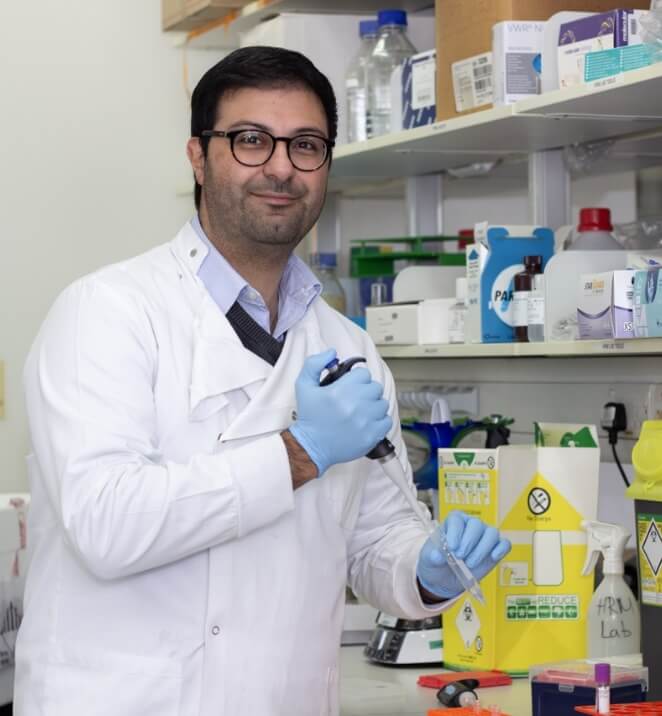
Dr Ed Jabbari – MRC Clinician Scientist and honorary Consultant Neurologist (Movement Disorders specialist) at UCL Queen Square Institute of Neurology
“I began my PhD via PSPA’s Sara Koe fellowship between 2016 and 2019. This allowed me to go on to obtain a Clinical Research Training Fellowship from the Medical Research Council to focus on discovering genetic determinants of disease progression in PSP.
More recently, as a post-doctoral researcher, PSPA has again supported me via a research grant to start work on developing novel diagnostic biomarkers for PSP. I believe this could be a huge step forward in being able to have a test to support diagnosis in the early stages of the condition. Our next step is to make this test work when applied to spinal fluid samples from living patients, and then eventually a blood-based test, as blood is more accessible than spinal fluid. This test will not replace a clinical assessment; rather, it will form part of a battery of tests and assessments to aid clinicians when making a diagnosis, particularly in tricky situations where there is a lot of clinical overlap between PSP and Parkinson’s.
PSPA research funding has been critical in helping us get to this point. It gave me the opportunity to learn the technique of seed amplification assay and to work with the researchers in the USA to develop this for the tau protein. I hope that in a couple of years this test will be used in clinical practice.”
Dr Maura Malpetti – Senior Research Associate and Race Against Dementia Alzheimer’s Research UK Fellow at the University of Cambridge.
“The PSPA Small Research Grant played a key role in moving our research on inflammation biomarkers in people with PSP & CBD forward.
PSPA support enabled us to generate important data that has been included in a scientific publication, as an open-access pre-print and now under review in a scientific journal, and in further grant applications. The project showed that lower levels of specific immune cells (“TREM2+”), combined with increased activation of another specific part of the immune system, characterise people with PSP, CBD and related conditions, as compared to healthy volunteers. This particular dysfunctional immune “signature” is related to how fast people with these conditions clinically decline. This was a key pilot study to expand our research programme and secure further funding (ie a project grant with CurePSP)”

Type Of Funding Available
PSPA currently offers three core funding schemes to support different stages and scales of research:
PSPA Small Research Grants
Our current Small Research grants are designed to support early-stage or pilot studies that explore new ideas or generate preliminary data. With funding of up to £25,000 available for projects of up to two years, the scheme is particularly well-suited to researchers looking to test hypotheses or build towards larger-scale work.
PSPA Project Research Grant
Aimed at more developed projects, this grant supports Progressive Supranuclear Palsy and Corticobasal Degeneration research that can directly contribute to PSPA’s strategic aims, such as improving diagnosis, developing treatments, or enhancing the quality of life. With funding available up to £250,000, this grant typically funds a project of up to three years, with budgets tailored to the scope and complexity of the proposed work.
Clinical Research Training Fellowship
The development of early career researchers is essential for the future of PSP & CBD research. Fellowships enable early career researchers to undertake a clinical research project, providing them with the skills and experience to bridge the gap between the lab and clinic in their future careers.
We are proud to be teaming up with the Association of British Neurologists (ABN) to offer a three-year Clinical Research Training Fellowship in Neurology.
The Fellowship, funded by PSPA, is full-time and will support the salary of a current or future neurology trainee to allow completion of a higher research degree in any area of Clinical Neuroscience of clear benefit to those with primary neurological diseases, including PSP, CBD or CBS.
Chosen candidates will be expected to begin their research project by September 2026.

Dr Robert Durcan – a Clinical Research Fellow undertaking a PhD with the University of Cambridge – is currently working on his three-year project, says:
“With funding from PSPA, I worked towards delivering a clinical trial (NORAPS) exploring if we can improve symptoms by reversing the noradrenaline deficit PSP causes. This trial is just about to complete recruitment, and we anticipate the results in late 2025.
Preliminary results, using brain scans to measure the area of the brain that produces noradrenaline, support what we already know about the degeneration caused by disease severity, depression, anxiety and impulsivity. By the end of the trial, I hope to establish if the degree of degeneration seen at the beginning of the trial can predict potential response to drug treatment with atomoxetine.
I will also be looking at over 350 proteins in blood samples, which are markers of brain health and brain inflammation and how they might change over time. And if the drug could have a potentially helpful effect on these blood proteins. This builds upon recent work, identifying patterns in blood proteins that may help with PSP diagnosis and finding targets for treatments.”
Sign up to receive the latest information about research and funding
We offer early-career researcher funding and applications for established researchers alike and encourage interdisciplinary and collaborative proposals that draw on a range of expertise. To ensure that every pound we invest delivers meaningful progress, all PSPA-funded research is monitored through regular progress reporting and financial oversight. We also encourage researchers to share findings with the wider PSP & CBD research community through our research information sessions, contributing to global knowledge and momentum. By maintaining these high standards, PSPA ensures that the research we fund is not only credible and innovative but truly focused on improving lives.
To explore all current PSPA research funding opportunities and access guidance documents, visit our Funding Opportunities for Researchers page.
Examples Of Research We Support
Over the years, PSPA has invested £1.3 million into the PROSPECT study, and we’ve funded four research fellowships too. PSPA is currently funding eight research grants and one research fellowship. As well as investing in research ourselves, we also help to support other projects and clinical trials looking into PSP & CBD. We work with leading researchers and pharmaceutical companies to help shape studies, promote research and aid participant recruitment.
We are proud to fund and support landmark studies like PROSPECT. PSPA has invested £1.3 million into the PROSPECT study, which is the flagship project of our Research Network and fulfils the core aims of our Research Strategy.
Led by Professor Huw Morris at the National Hospital for Neurology and Neurosurgery in London, this multi-centre study has recruited over 1,000 participants across 29 UK sites, including individuals with PSP, CBD, and healthy controls.

“We believe that the network can address some of the barriers to research and be providing better care for patients.”
Professor Huw Morris, PROSPECT Network Chief Investigator
PROSPECT aims to deepen understanding of these conditions by collecting extensive clinical data, brain imaging, and biological samples such as blood, cerebrospinal fluid, and DNA. This rich dataset has enabled researchers to identify genetic risk factors, improve diagnostic criteria, and explore disease progression patterns. Notably, findings have revealed that PSP is more prevalent than previously thought and that early-onset PSP can resemble Parkinson’s disease, highlighting the importance of accurate diagnosis.
The study’s infrastructure has also facilitated clinical trials and the development of potential biomarkers, paving the way for future therapeutic interventions. PROSPECT continues to be a cornerstone in PSP & CBD research, offering hope for earlier diagnosis and effective treatments.
Support For Recruiting Participants
A critical aspect of our commitment to facilitating neurodegenerative disease research is supporting researchers in recruiting participants for ethically approved studies. We offer a range of research recruitment services to connect researchers with individuals living with PSP or CBD, as well as their families and carers.
Our support includes:
Promotion through PSPA Channels
We can share information about your study and your PSP & CBD research updates via our website, social media platforms, and newsletters, reaching a broad audience interested in PSP & CBD research. We can also share details of people who’ve expressed an interest in research participation with you. We can also include information in our quarterly PSPA Matters Magazine. This magazine is circulated by post and email. It is full of care information, research news, volunteering updates, inspirational stories of people affected by PSP & CBD and our amazing fundraisers.
PSPA Research Involvement Members
Otherwise known as PRIM, was established in 2022 and is a group of people, all of whom are affected by PSP or CBD in some way. With 11 members who work alongside our Research Coordinator, PRIM take part in advocacy programmes developed by pharmaceutical companies and shapes literature about research.
Engagement with Support Networks
We can share study details with our network of regional support groups and volunteers across the UK, facilitating community-based recruitment.
Guidance on Recruitment Materials
We provide advice on creating clear and accessible participant information sheets and consent forms, enhancing understanding and participation rates.
Research Achievement So Far
Over the past three decades, key achievements include establishing the prevalence of PSP, improving diagnostic criteria, and supporting studies that have deepened the understanding of these complex neurodegenerative conditions. PSPA’s funding and research collaborations have facilitated numerous projects, ranging from basic science investigations to clinical trials, all aimed at enhancing diagnosis, treatment, and care for those affected. These efforts have not only expanded scientific knowledge and PSPA’s research network but also laid the groundwork for future therapeutic developments.
Collaborate with PSPA
Whether you are looking to advance PSP & CBD awareness, research or diagnosis by applying for funding, or looking to embed patient involvement in your work, PSPA welcomes collaboration. By working with us, you join a growing network committed to tackling PSP & CBD through impactful, patient-focused research. To discuss opportunities, contact our research team at:
Neuro2026: The PSP & CBD International Research Symposium
CurePSP, in partnership with PSPA, will host Neuro2026: The PSP & CBD International Research Symposium on 5 to 6 November 2026.
This biennial symposium brings together leading neuroscientists, clinicians and researchers worldwide to share the latest advances in Progressive Supranuclear Palsy (PSP) and Corticobasal Degeneration (CBD). The event is designed to foster interdisciplinary collaboration across preclinical and clinical research domains.


Highlights for the event:
- Cutting-edge presentations and panel sessions focused on biomarkers, genetics, therapeutics, epidemiology, and disease mechanisms.
- Opportunities for poster presentations, networking and idea exchange.
- A hybrid format, enabling both in-person and virtual participation.
- Open to all researchers with an interest in PSP, CBD or related tauopathies.
Discover more about the event and join the mailing list to be notified when registration opens by clicking the button below.
Frequently Asked Questions
What is PSPA’s research strategy for PSP & CBD?
PSPA funds and promotes research to improve diagnosis, treatment and care for people living with Progressive Supranuclear Palsy (PSP) and Corticobasal Degeneration (CBD). The PSPA Research Strategy comprises four strategic elements, focusing on prioritising PSPA research, supporting future research stars, engaging patients and carers in research, and enhancing communication, collaboration and change.
What types of research does PSPA fund?
We support a wide range of CBD & PSP research that is focused on prevention and causes, awareness and education, improved diagnosis, reduced misdiagnosis, drug discovery and targeted treatments for underlying causes, and better interventions for the treatment of all the symptoms of the conditions. Funding is open to researchers across neurology, allied health, nursing and social care, and others, as long as the project aligns with our research priorities.
Who can apply for a PSPA research grant?
Our funding schemes are open to both new investigators and established researchers based in universities, hospitals or research institutions. We particularly welcome applications from teams who collaborate with people living with PSP & CBD, carers, healthcare professionals, and clinicians, and whose work supports our strategy to improve diagnosis, treatment and care.
How does PSPA decide which research projects to fund?
All applications are reviewed by an independent, expert peer-review process to make sure we only fund high-quality, impactful research. PSPA is a member of the Association of Medical Research Charities (AMRC), which means our processes follow recognised standards for fairness, transparency and scientific diligence. All applications undergo external peer review by subject-matter experts in neurology, neurodegeneration, allied health, clinical trials and/or biomedical science. Applications are then assessed by PSPA’s Research Committee, who make recommendations based on scientific quality, feasibility, alignment with PSPA’s Research Strategy, and potential benefits for people affected by PSP and CBD.
Where can I find information about current PSPA-funded research projects?
You can explore our current grants, fellowships and major studies on the and learn more about our achievements on the pages, respectively. These summaries show what each project is investigating, who is leading it and how it could benefit people living with PSP & CBD in the UK and beyond.
What eligibility criteria must researchers meet to apply for PSPA funding?
Applicants must be based at a recognised university, NHS trust, research institute, or an equivalent UK institution. Applicants normally need a postdoctoral or clinical qualification, and consent from their institution to collaborate on the grant.
Does PSPA fund early-career researchers or fellowships?
Yes. PSPA welcomes applications from early-career investigators and offers fellowships. These are designed to help new researchers generate important preliminary data, publish early findings, or build on research related to Progressive Supranuclear Palsy and Corticobasal Degeneration.
What support does PSPA offer for participant recruitment into PSP or CBD research?
PSPA can promote ethically approved studies, share recruitment opportunities within its community, and help connect researchers with people living with PSP & CBD who are interested in participating in research.
How can I stay informed about upcoming funding calls or research collaborations?
Researchers and clinicians can sign up for PSPA’s research newsletter, attend research-specific meetings and workshops, or follow PSPA channels for announcements about funding rounds, collaboration opportunities, and PSP & CBD research updates. You can also contact the PSPA Research Team directly to discuss your research collaboration ideas.