
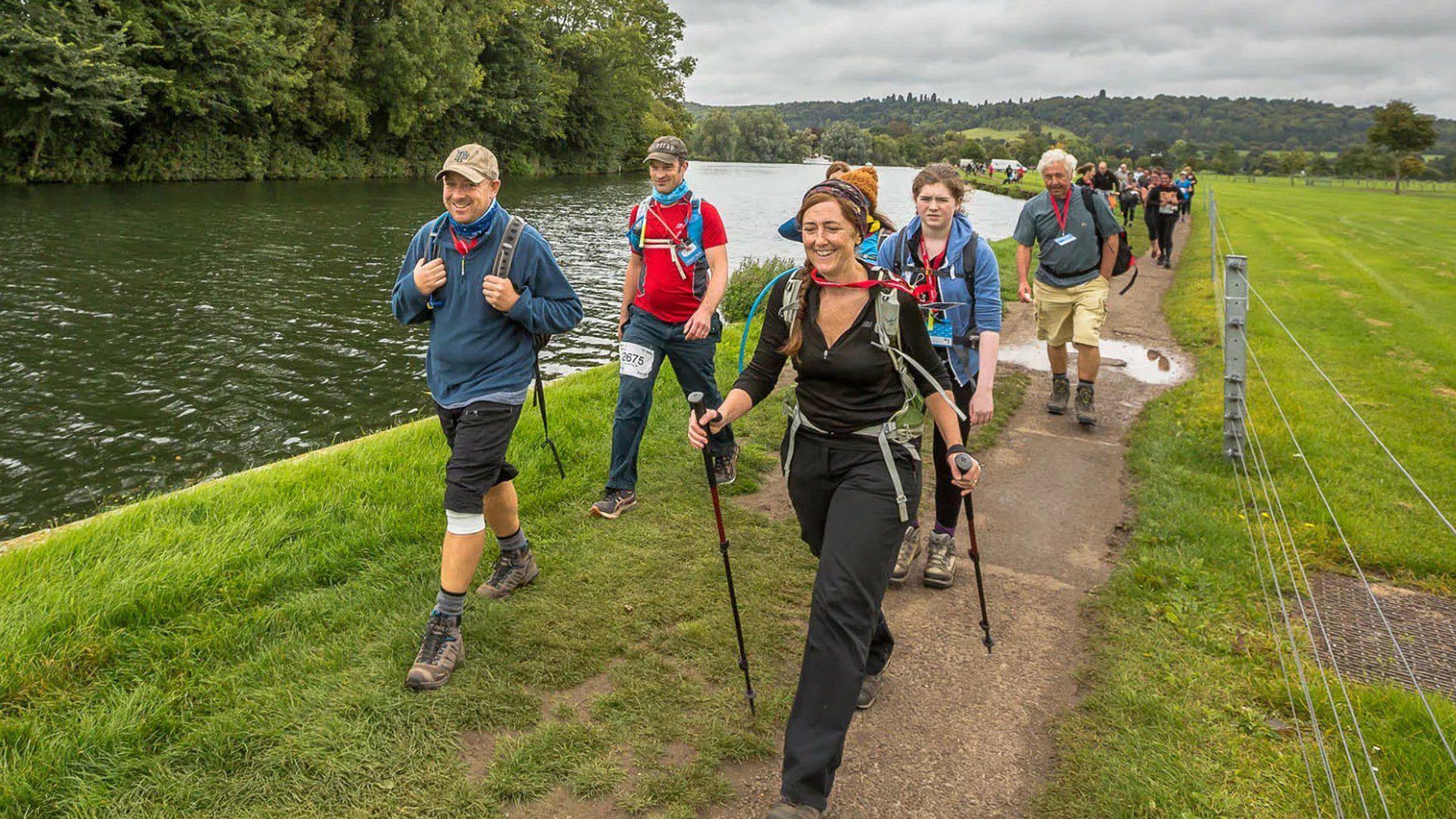
Taking on a challenge event is one of the most powerful ways to support charities like PSPA. Whether you are running, trekking, cycling or taking a completely different challenge, your efforts help raise vital funds and awareness for people living with rare neurodegenerative conditions like Progressive Supranuclear Palsy and Corticobasal Degeneration.
These events not only help fund research and support services but also bring people together, increase awareness, and create a sense of community around a shared cause.
For many of our supporters, they are also a personal journey.
A challenge event is a great opportunity to do something meaningful for a family member or friend who may have PSP or CBD. At the same time, training for a challenge can also improve physical and mental health and build confidence as you work towards taking on the challenge.
By preparing in advance, your journey can be just as exciting and rewarding as the event itself. Here are some of our top tips to help you train for a challenge event.
Give yourself enough time to train
Whether you’re preparing for a 5km or a multi-day trek, your body needs time to adapt. Which is why, it is always recommended to start training as soon as you decide to take on a challenge. Gradually increasing your distance or intensity each week helps to build endurance safely and reduce the risk of injury.
Having a simple yet structured plan can make all the difference. You can work backwards from your event date and also include rest days to allow your body to recover.
Train for the challenge
While general strength and endurance training is recommended, it is also important to create a training regimen specifically for your challenge.
For example, if you’re trekking, include long walks on hills or uneven terrain, or if you’re running, focus on pacing and distance. You can also simulate event conditions and carry the kit you’ll use, or train on a specific terrain, so you are well prepared on the day.
Gradually build up endurance
It can be tempting to push hard, especially when you’re fundraising for a cause that is close to your heart. But it is essential to ensure that you train slowly and gradually, rather than doing it all at once.
It is also important to have rest days, to allow your muscles to repair and strengthen, without risking injury or burnout. So, make sure you include rest days in your training schedule and gradually build up your strength and endurance.
Follow a balanced approach
Whether you train regularly or are just beginning, it is always recommended to follow a balanced approach when it comes to training for a challenge event. Incorporating a mix of training styles can improve performance and reduce injury risk, such as:
- Strength training to support muscles and joints.
- Flexibility or mobility work to improve movement.
- Cross-training, like swimming or cycling, that supports overall fitness.
Eat right and stay hydrated
Getting the right nutrition and staying hydrated can have a big impact on how well you train and recover from any exhaustive training sessions.
Eating a balanced diet to support energy levels and recovery, and staying well hydrated before, during, and after training, is absolutely essential throughout your journey.
Invest in the right kit
After you’ve spent weeks (or possibly months!) training, the last thing you want is to be let down by your shoes, clothes, or equipment on the day of the event.
Investing in the right kit and testing it before the day can help avoid any unpleasant surprises. It is ideal to practise in the shoes and clothes you would be wearing, along with any equipment you’ll be using, like backpacks or walking poles.
Train your body and mind
Challenge events are both physically and mentally taxing. Which is why you must also work towards building mental resilience to push through tougher moments while training.
The best way to do this is to create manageable goals and a practical training schedule. It is also helpful to consistently keep your focus on who and why you are doing the challenge for, so you can get right back up every time your motivation dips.
When it feels tough, remember:
- You are helping fund vital research.
- You are supporting families affected by Progressive Supranuclear Palsy and Corticobasal Degeneration.
- You are part of a community advocating for a better future for people living with PSP & CBD.
Connect with other supporters
You need not be alone on your training journey. Fundraising and training for challenge events with others doing something similar can help you stay motivated.
You can do this by joining a local group, scheduling your training sessions with friends or family, and connecting and sharing your journey with other supporters taking on similar challenges.
Sharing your progress can also inspire your sponsors and boost your fundraising efforts.
Taper before event day
As your event approaches, it is important to decrease the intensity of your training and taper down.
In the lead-up to the event day, it is recommended you focus on lighter sessions, prioritise rest and sleep, and finalise your kit and plan.
This helps your body recover so you are well-rested and energised.
On the event day
The day you’ve been training for has finally arrived! To ensure that your day goes smoothly and you give it your best shot:
- Don’t overeat on the night before to avoid feeling sluggish or bloated on the event day.
- Don’t forget safety pins for your bib number.
- Organise a place to meet family and friends before, as you may not have phone signal after the race.
- Make sure you have some salty snacks and fluids.
- Download any apps you may need to track your runner around the route, and donate directly via the app.
- Share your fundraising page across your social media channels to help raise awareness around the event and the charity.
How can PSPA support you
Training for a challenge event is not easy, but it is always worthwhile.
Every step you take, or mile you train, helps PSPA ensure that people with PSP & CBD receive support and care that is coordinated, has continuity and is compassionate.
No matter which challenge event you are training for, we are with you every step of the way. Our team is here to support you with fundraising advice, training guidance, practical resources, and motivation whenever you need it. We also run WhatsApp groups for events to allow participants to connect, share tips, and arrange meetups on the day of the event.
We are committed to making your journey as well as the event as rewarding as possible and turning it into real impact for people living with Progressive Supranuclear Palsy and Corticobasal Degeneration.
For more information on challenge events and fundraising, please contact our team on 01327 322414 or email us at fundraising@pspassociation.org.uk.
You can also watch PSPA’S Research Coordinator, Megan, speak about all the things to keep in mind on the day of a challenge event, and how to better prepare for it.