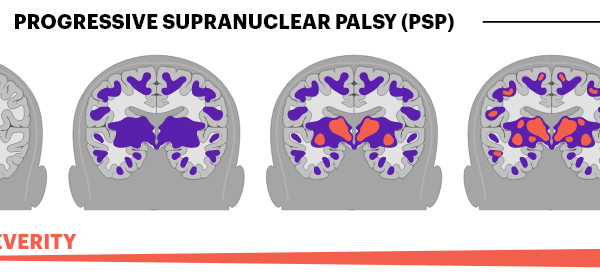

Progressive Supranuclear Palsy and Corticobasal Degeneration are two Atypical Parkinsonian Diseases that are commonly diagnosed as Parkinson’s Disease in early stages. This is because people with PSP & CBD frequently present with motor features that resemble Parkinson’s disease, such as slowness of movement, rigidity, postural instability and gait disturbance.
However, as these diseases progress, it becomes clear that the symptoms are not typical of Parkinson’s. Weak or no response to Parkinson’s drugs, early falls and eye movement problems (specifically in PSP), and asymmetric motor symptoms (often in CBD), ultimately lead to a diagnosis of PSP or CBD. But it may take years for someone with these conditions to receive a definitive diagnosis.
While CBD & PSP share many motor symptoms with Parkinson’s, several distinct cognitive and neuropsychiatric changes often occur early or accompany the motor symptoms in both Progressive Supranuclear Palsy and Corticobasal Degeneration and are not usually present in early Parkinson’s Disease. These include changes in executive functioning, language, behaviour, motivation, and mood, among others. Identifying these early red flags can potentially help clinicians and healthcare professionals make an early and more accurate diagnosis.
To help improve awareness and develop a deeper understanding of these cognitive and mental health aspects of Progressive Supranuclear Palsy and Corticobasal Degeneration among healthcare professionals, PSPA is hosting our first masterclass of 2026 on Wednesday, 25 March 2026, with Dr Susan O’Connell, Consultant Clinical Psychologist, Neuropsychology – Queen Elizabeth University Hospital, Glasgow.
What Will the Masterclass Cover?
This free online masterclass is for you if you are a healthcare professional working with patients affected by PSP or CBD, or other similar neurodegenerative conditions. The session will focus on the cognitive and psychological aspects of these conditions and how they impact clinical practice. Here’s why you should attend:
- Deepen your understanding of the cognitive and neuropsychiatric features of PSP & CBD.
- Recognise common mental health presentations, including changes in mood, behaviour, and executive functioning.
- Enhance assessment skills through practical guidance on identifying cognitive and psychological symptoms in clinical settings.
- Develop effective management strategies to support patients and families coping with complex neurological change.
- Increase confidence in multidisciplinary collaboration, ensuring holistic and person-centred care.
PSP & CBD remain challenging conditions to diagnose and manage due to their progressive nature and lack of specific treatment. But knowing what to expect, particularly the cognitive and mental health changes associated with the condition, can help improve diagnosis and symptom management.
If you have any issues with your booking or would like further information about this event, please email info@pspassociation.org.uk .