
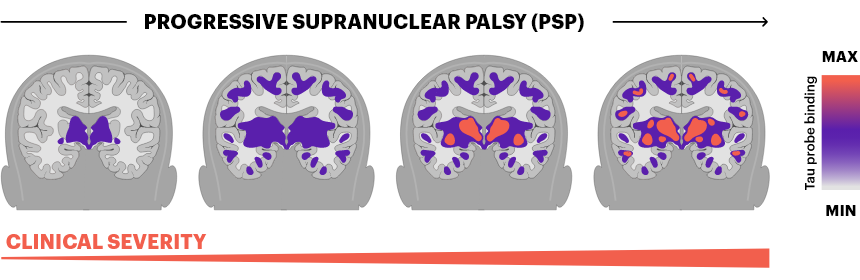
Neurodegenerative diseases are often difficult to diagnose because many of them present with similar early symptoms, making it challenging for healthcare professionals to make an accurate diagnosis. Progressive Supranuclear Palsy is one such rare neurodegenerative condition that commonly takes years to diagnose and is very often misdiagnosed as Parkinson’s in the early stages due to several overlapping symptoms.
A very prominent recent example is that of the Rev. Jesse Jackson Sr., who sadly passed away on 17 February 2026 at the age of 84. The notable civic rights activist had been diagnosed with PSP in 2025, having previously been misdiagnosed with Parkinson’s in 2017. Unfortunately, his journey mirrors that of many others with Progressive Supranuclear Palsy and Corticobasal Degeneration. As per our 2022 survey, in the UK, nearly 60% of people living with PSP & CBD initially received a misdiagnosis, with an accurate diagnosis often taking up to three years. Sadly, by then, many are halfway through their disease life expectancy.
This is why PSPA is dedicated to raising awareness about PSP & CBD among healthcare professionals, and funding research around new diagnostic methods and targeted treatment to help accelerate diagnosis and improve symptom management.
Below, we explain the key differences between Progressive Supranuclear Palsy and Parkinson’s Disease and how we can reduce misdiagnosis by being aware of the red flags.
What is Progressive Supranuclear Palsy (PSP)?
Progressive Supranuclear Palsy (PSP) is a complex neurological condition belonging to a category of Atypical Parkinsonian Disorders that progressively affects movement, balance, vision, speech, and swallowing. It is caused by the overproduction and accumulation of tau protein in brain cells. Although many PSP symptoms overlap with Parkinson’s, there are a few distinct symptoms, like early backward falls, eye gaze issues, and speech problems, which can help diagnose the condition.
What is Parkinson’s Disease (PD)?
Parkinson’s Disease, on the other hand, is a much more common neurodegenerative disease that affects movement, muscle control, and balance. It is caused by the death of brain cells that produce dopamine, leading to reduced motor function.
What are the overlapping symptoms in PSP & Parkinson’s Disease?
Several common symptoms occur in Progressive Supranuclear Palsy and Parkinson’s, which lead to a misdiagnosis in most cases in the early stages. Some of these are:
- Bradykinesia (slowness of movement)
- Rigidity
- Gait change
- Unstable posture
- Monotone speech
- Fatigue
- Apathy
- Cognitive decline
PSP diagnosis is sometimes delayed because definitive symptoms like eye movement problems may emerge later. However, understanding and recognising the key differences between the conditions can make a huge difference in how soon and effectively an individual is diagnosed with the right ailment.
What are the key differences between PSP & Parkinson’s Disease?
Although both conditions cause neurodegeneration and have several overlapping symptoms, there are still distinctive characteristics of PSP and PD that clinicians can look for to make a definitive diagnosis.
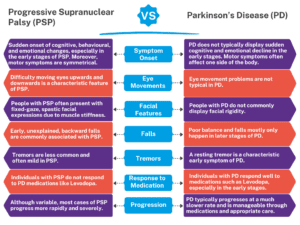
Life Expectancy
The life expectancy with Progressive Supranuclear Palsy is highly variable. Although the average life expectancy of PSP is often cited to be between five and seven years from symptom onset, the prognosis remains variable based on the subtype of the disease, presence of complications, access to supportive care, and other individual factors. For instance, Rev. Jesse Jackson lived with PSP for nearly a decade, despite being initially misdiagnosed with Parkinson’s.
In contrast, people with Parkinson’s Disease have a near-normal life expectancy, depending on the age at which they are diagnosed and the presence of other vulnerabilities.
Reducing Misdiagnosis
Whether you are a healthcare professional or an individual experiencing symptoms, being mindful of the distinctive features of PSP and PD can help reduce misdiagnosis and help you get access to the right care sooner. Asking questions like the ones listed below can help you or your healthcare provider assess your situation more effectively.
“Are eye movements noticeably affected?”
“Have there recently been significant vision changes?”
“Have there been frequent, unexplained backward falls?”
“Has swallowing and communication increasingly become difficult?”
“Is there a constant resting tremor?”
“If diagnosed with PD, how has the response been to Parkinson’s-related medication?”
Why Awareness and Research Matter
Progressive Supranuclear Palsy currently has no specific diagnostic test or treatment. However, a lot of research is ongoing to find ways to make faster and more accurate PSP diagnosis and develop a treatment plan that can slow the progression and severity of the disease. As the only UK charity that supports PSP & CBD, PSPA is committed to improving awareness about these rare conditions among clinicians and healthcare professionals and funding life-changing PSP & CBD research, so that everyone affected by them can hope for a better future.