Living with Progressive Supranuclear Palsy and Corticobasal Degeneration can look different in different people. It is one of the most challenging aspects of living with these rare neurological conditions. A symptom that might appear small to somebody else can have an enormous impact on everyday life in another.
Being unable to keep your eyes open. A painful muscle causing an arm to be in an uncomfortable position. A stiff neck making it hard to sit comfortably. Problems swallowing and managing saliva. These are some of the most common symptoms of PSP & CBD that many people have to deal with daily.
These symptoms can affect much more than physical comfort. They can change your ability to work, communicate, move around safely or do the things that help you feel independent.
While there is currently no cure, treatments including Botulinum toxin or Botox may help with managing symptoms of PSP & CBD and improving comfort and quality of life.
Botox cannot slow or stop the progression of PSP or CBD. However, when used for the right symptom and carefully targeted by an experienced specialist, it can sometimes provide good relief and make aspects of everyday life more manageable.
What is Botox and how does it work?
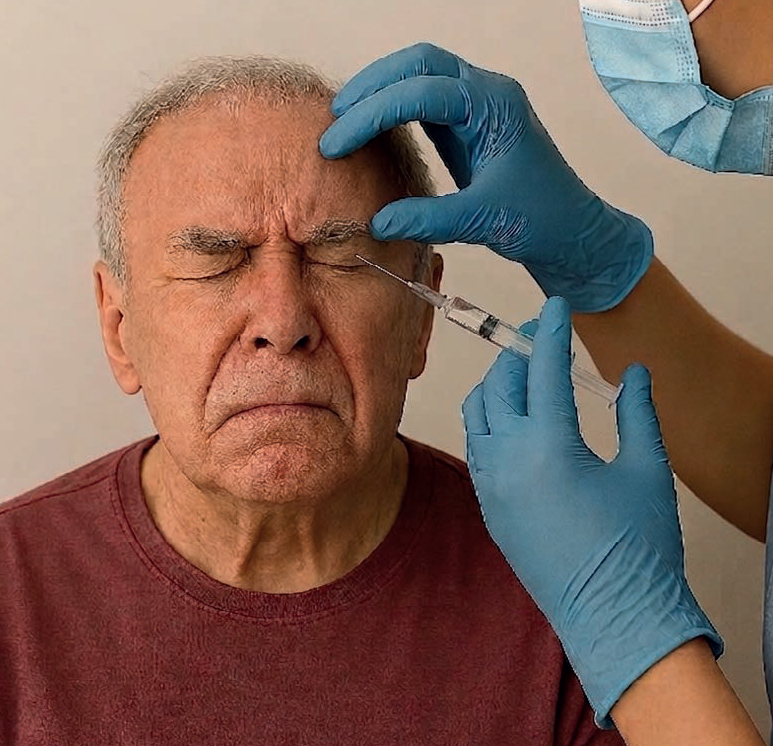
You may have heard of Botox as a cosmetic treatment, but Botulinum toxin is also medically used to treat a range of neurological symptoms.
It works by temporarily blocking signals between nerves and muscles. When a small amount is injected into a specific muscle, it weakens the muscle and reduces unwanted contractions.
For people living with PSP & CBD, this can be particularly useful when muscles become overactive or contract involuntarily. Treatment is tailored to the individual, with the muscles selected, amount used and expected benefit depending on the symptoms being treated.
Can Botox help with different stages of PSP & CBD?
The stages of PSP & CBD can progress differently in all individuals. There is no single pathway that everyone follows. So, the stage at which you may need Botox injections for symptom management may differ from someone else who may need it sooner or later than you. The decision is based more on whether symptoms such as involuntary eyelid closure, dystonia, muscle stiffness or saliva problems are affecting comfort, safety or everyday life.
How can Botox help with eye problems in PSP?
Problems affecting the eyes and eyelids are particularly common in Progressive Supranuclear Palsy. These can include blepharospasm, where muscles around the eyes contract involuntarily and force the eyelids to close.
You may also find it difficult to open your eyes. The two problems can occur together, and distinguishing between them can be important when deciding whether and where Botulinum toxin should be used.
If you are experiencing involuntary eyelid closure, the effect on daily life can be considerable.
It may become difficult to:
- Read or watch television.
- Use a computer or phone.
- Move around safely.
- Complete detailed tasks.
- Take part in hobbies and activities.
- Maintain independence.
In some people, bright light can make involuntary eyelid closure particularly difficult.
By injecting Botulinum toxin into carefully selected muscles around your eyes, specialists can weaken the muscles forcing the eyelids shut. This may make it easier for you to keep your eyes open.
The treatment will not restore normal eyelid function, and it will not work for everyone. However, research into the eye problems associated with PSP indicates that Botulinum toxin can produce a good response in people with blepharospasm.
Salim’s experience: “It really made a big difference.”
For Salim, difficulty keeping his eyes open became one of the symptoms of PSP that had the greatest impact on his independence.
Salim ran a printing-related business, where being able to read and carry out detailed work was an important part of his day. As PSP began to affect his movement, speech and balance, his eyelids also began to close involuntarily. This gradually made it difficult to work until he could no longer carry on and had to close the business.
At a Movement Disorders Clinic, Botulinum toxin injections around his eyes were suggested.
His wife, Salma, remembers the difference the treatment made.
“Following each round of injections, Salim was able to keep his eyes open for longer. It really made a big difference.”
The injections did not stop Salim’s PSP from progressing. But for a time, they helped him remain active in his business and maintain a degree of independence, something that was extremely important to him.
“Botox didn’t stop the progression, but it certainly slowed the impact on our lives. In those early years of treatment, it extended the time he could function independently and engage in meaningful activity.”
Salim received injections approximately every three months, although Salma noticed the benefit would gradually wear off after five or six weeks.
Over time, however, the treatment has become less effective for him. Salma also noticed differences depending on where the injections were given. Adjustments to the injection sites brought some improvement, although not to the level Salim experienced during the early years of treatment.
His experience highlights that the response to Botox can vary from person to person and can change over time. Where the injections are placed and which muscles are targeted can also matter. This is why assessment and treatment by a clinician experienced in Botulinum toxin and movement disorders is important.
How long does Botox take to work?
Botox does not usually work immediately.
Consultant Neurologist Dr Boyd Ghosh explains that people may notice an effect around one to two weeks after treatment, with the benefit lasting around six to eight weeks for some people with PSP.
How long the effect lasts can vary considerably. The treatment itself is temporary, so injections need to be repeated if they are beneficial.
For Salim, injections were given every three months, with the benefits beginning to wear off after around five or six weeks.
The treatment plan is individual to each person, and specialists may adjust the muscles treated, dose or timing depending on the response.
Can Botox help with dystonia and painful muscle stiffness?
Botulinum toxin is not just used for eyelid problems.
Dystonia causes muscles to contract involuntarily, sometimes forcing part of the body into an abnormal or uncomfortable position. It can occur in both PSP & CBD and may cause significant pain.
It may affect areas including:
- Hands and arms.
- Neck.
- Feet.
- Eyelids.
- Other muscles of the face.
Dystonia can be particularly prominent in CBD, frequently affecting an upper limb.
A small study involving ten people with Corticobasal Syndrome (CBS) and dystonia found that Botulinum toxin treatment significantly reduced muscle tone. Among those experiencing pain, there was also a significant reduction in pain scores.
However, reducing muscle tightness does not necessarily mean that someone will regain function in the affected limb. In some situations, the aim may instead be to reduce pain, improve comfort, make personal care easier or allow an affected limb to be in a comfortable position.
These can still be favourable outcomes for someone living with the condition and for those supporting them.
Botulinum toxin may sometimes be considered when particular muscles are contributing to the problem. However, the decision needs careful specialist assessment.
Salim was offered Botox when he developed pain at the back of his neck and began leaning his head and upper body to one side. In his case, the treatment was not as helpful as the injections around his eyes, and he decided not to continue with it.
Instead, Salim and Salma found a combination of postural adjustments, exercises recommended by his physiotherapist and a neck brace more useful.
Their experience highlights that managing PSP & CBD rarely follows a set treatment. Botox may be helpful for one symptom but not another, and physiotherapy, occupational therapy and other approaches can be more beneficial in maintaining comfort and supporting everyday life.
Can Botox help with drooling and saliva problems?
Drooling and saliva problems are other common symptoms that people with PSP & CBD frequently experience. They can include:
- Drooling.
- Sore or irritated skin around the mouth.
- Difficulty speaking clearly.
- Embarrassment or anxiety in social situations.
- Additional demands on family members and carers.
Botulinum toxin can be injected into the salivary glands to temporarily reduce saliva production.
If you already have swallowing difficulties, however, saliva management may need careful assessment. A speech and language therapist and the wider MDT may be involved in deciding on the safest and most appropriate approach.
What are the possible side effects of Botox?
Botulinum toxin is a well-established neurological treatment, but that does not mean it is right for everybody.
Side effects depend partly on where the injections are given and can include:
- Pain or bruising at the injection site.
- Unwanted weakness in nearby muscles.
Treatment around the eyes can sometimes cause temporary eyelid drooping or other local effects. Treatment affecting the neck or salivary glands requires particular care in someone who already has difficulties with swallowing.
Before treatment, it is important that the specialist understands your wider PSP or CBD symptoms, including any changes to swallowing.
Is Botox right for you?
The response to Botulinum toxin varies.
For one person, it might provide a noticeable improvement in a symptom that is restricting their daily life. For somebody else, the benefit may be small, short-lived or absent.
As Salim’s experience shows, effectiveness can also change as the condition progresses.
That conversation should involve you wherever possible, alongside your family or carer and wider healthcare team.
Managing symptoms effectively matters
When there is no cure or treatment for a condition, it can sometimes feel as though symptom management is not that important.
But being able to open your eyes for longer matters.
Being in less pain matters.
Being able to sit more comfortably, taking part in an activity you enjoy, or making personal care a little easier matters.
For your families and carers too, even a relatively small improvement in one difficult symptom can make a tangible difference to everyday life.
Botox cannot stop PSP or CBD from progressing. Salim and Salma’s experience makes that clear. His symptoms have progressed, and today his eyes are closed much of the time. His speech has become very soft, and swallowing difficulties have brought further challenges.
But the treatment gave him something valuable for some time: more opportunity to work, remain active and hold on to his independence.
For someone living with PSP & CBD, this can make a huge difference.
Speak to your healthcare team about Botox
If you or someone you care for is experiencing involuntary eyelid closure, painful dystonia, muscle spasm and rigidity or problems managing saliva, speak to your neurologist or specialist healthcare team.
They can consider the symptom in the context of your overall condition and, where appropriate, discuss referral to a Movement Disorders Clinic or Botulinum toxin injections.
You can read Salim’s experience about using Botox in this edition of PSPA Matters.