
We know that living with PSP (Progressive Supranuclear Palsy) or CBD (Corticobasal Degeneration) can bring many challenges, not just for the person diagnosed, but also for their loved ones. Whether you are trying to fully understand your diagnosis, looking for local PSP or CBD support services, or planning for changes that may be needed at home, it can be a lot to process. Having someone to talk to, who understands what you are going through can make a real difference.
That’s why we’re excited to share that our Link Volunteer Service has a new name and an updated focus — it’s now called the PSPA Befriending Service.
The aim of the service is to reduce isolation and provide much needed emotional support, as you come to terms with how your life could change, and face these changes along the way.
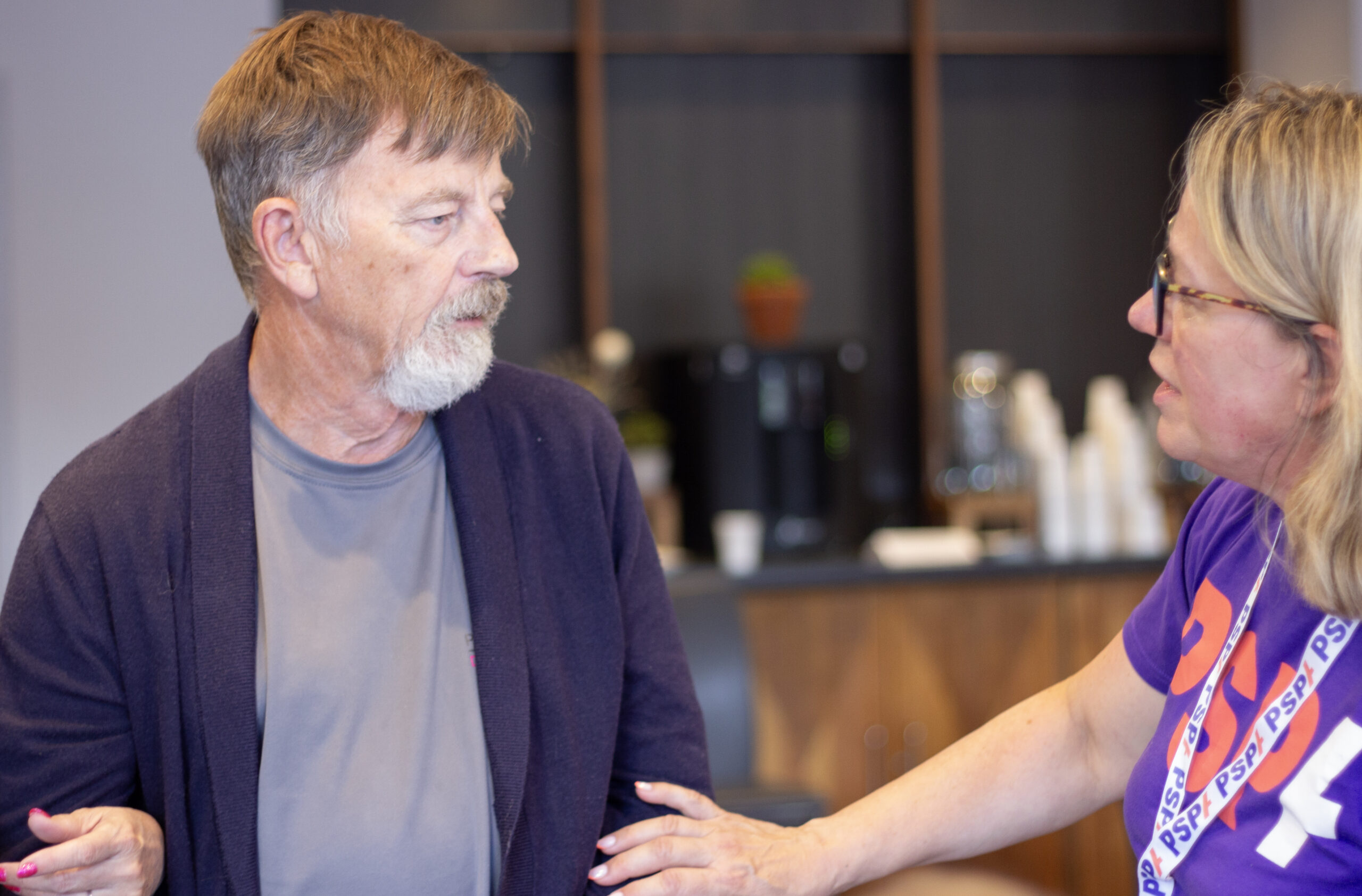
What the Befriending Volunteer Service offers
Our volunteer befrienders are here to offer emotional support, companionship, and practical information to people living with PSP & CBD, as well as to their carers and family members.
If you or someone close to you is finding things difficult, perhaps you’ve had a recent diagnosis, are feeling isolated, or are going through a tough time, we can match you with a trained local volunteer befriender who can visit you at home for up to a year and be a reliable companion throughout your journey.
Your befriender will be there to:
- Offer a listening ear and emotional support during a challenging time.
- Provide companionship by being someone to chat with and share experiences.
- Help you explore information about PSPA services or read our information sheets together.
- Connect you to additional help by signposting you back to our Helpline for specialist advice (for example, about benefits, Support Grants, or Continuing Healthcare).
How the Befriending Volunteer Service works
- Support for carers and family members can last up to a year, with a review every three months to make sure it’s still meeting your needs.
- The frequency and style of contact are flexible, usually weekly or fortnightly, depending on what works best for you.
- Volunteers can provide up to 15 in-person visits for people living with PSP & CBD.
- If there isn’t a volunteer nearby, befriending can also happen over the phone or via Zoom.
- Volunteer befrienders are predominantly matched based on their geographical location, as we try to provide face-to-face meetings where possible. Our Volunteer Coordinator assesses individual requirements and matches them with the best-suited volunteer.
How to access the Befriending Volunteer Service
There are a few simple ways to get started:
- Self-referral via the PSPA Helpline.
- Referral through the Helpline, Health and Social Care Professionals (HSCPs), or Support Group Coordinators with your agreement.
CONTACT US
You can learn more or self-refer to receive support from our Befriending Volunteer Service by calling our Helpline:
Telephone: 0300 0110 122
Email: helpline@pspassociation.org.uk.
Please note that we have a limited number of volunteers in specific areas, but we are working to expand the service. If none are available in your area, we should be able to offer support over the phone or via Zoom.
Areas currently with Volunteer Befriender: County Durham, Newcastle, Bedfordshire, Hertfordshire, London, Hampshire, Berkshire, Buckinghamshire, Cambridgeshire, Scotland, Wales, and Seven Oaks.
Frequently Asked Questions
Who can access PSPA’s Befriending Volunteer Service?
The service is available to anyone diagnosed with Progressive Supranuclear Palsy and Corticobasal Degeneration, their family members, and carers who may need emotional support or companionship if struggling with a new diagnosis, going through a time of crisis, or are feeling isolated.
How long does PSPA’s Befriending Volunteer support last?
The Befriending Volunteer support can last any time from four months up to a year, based on your individual needs and the availability of the volunteer befriender. We review cases every three months to ensure that our service continues to meet your requirements. You can stop accessing the service at any point.
How often are the Befriending Volunteer sessions conducted?
Our Befriending Volunteer sessions are flexible but are usually conducted weekly or fortnightly, depending on what works best for you, and the availability of the volunteer befriender.
Do PSPA volunteer befrienders receive any training?
Yes, all PSPA volunteer befrienders receive guidance on Progressive Supranuclear Palsy and Corticobasal Degeneration. They have to read all PSPA publications and complete a detailed workbook, a final Zoom training session with our Volunteer Coordinator and two short online courses on GDPR and Safeguarding Vulnerable Adults. We have quarterly Befriending Zoom meetings where volunteers can meet and discuss experiences and ask any questions. We also conduct a DBS check on all our Befriending Volunteers.
Do I need to be newly diagnosed or carer of a newly diagnosed individual with PSP or CBD to access PSPA’s Befriending Volunteer Service?
No, you can access our Befriending Volunteer Service at any stage after a PSP or CBD diagnosis.
Can I refer myself or someone I care for who is living with PSP or CBD?
Yes, you can refer yourself or someone you care for by contacting our Helpline. Alternatively, healthcare professionals and social workers can also make a referral for you.