
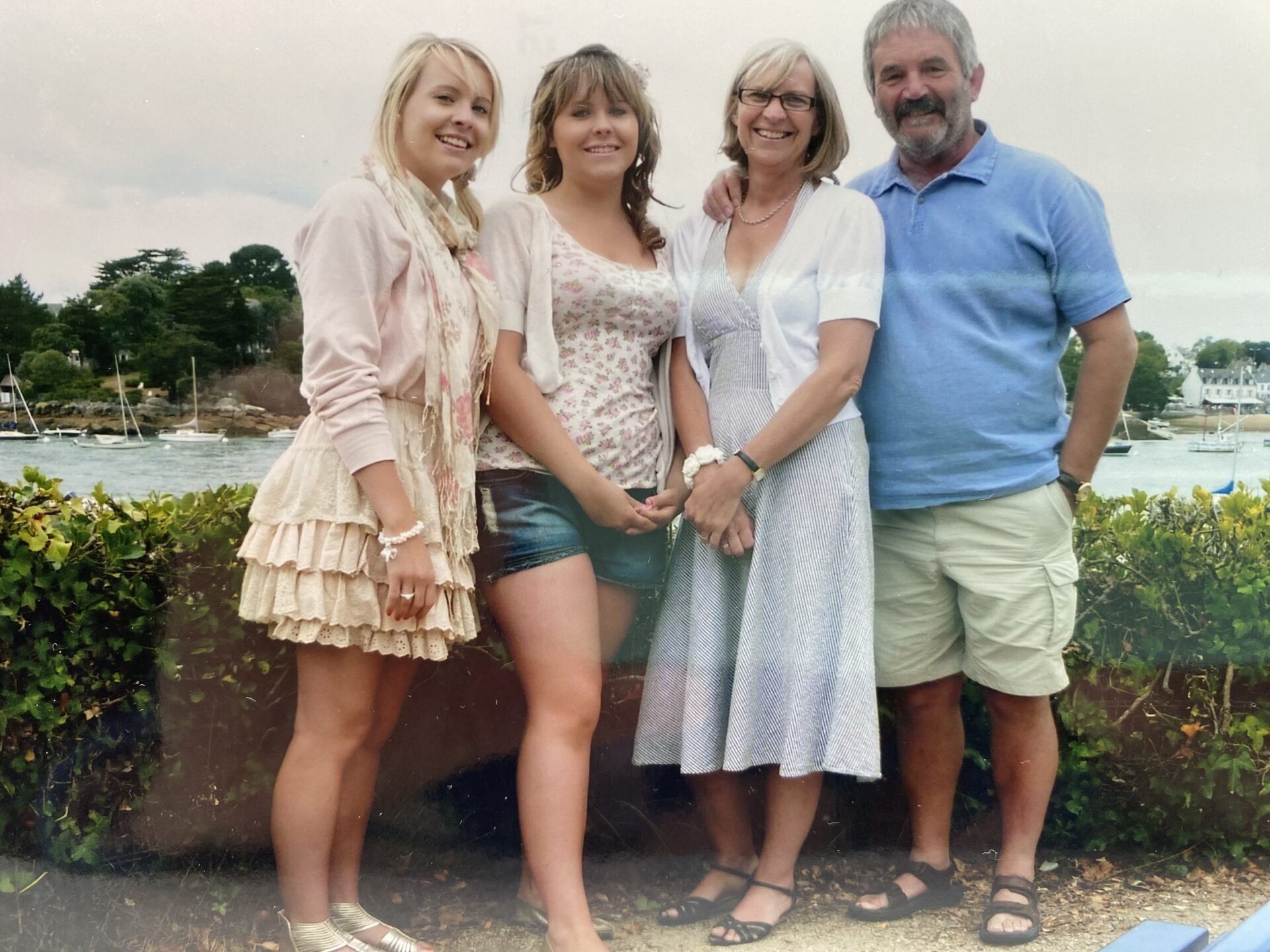
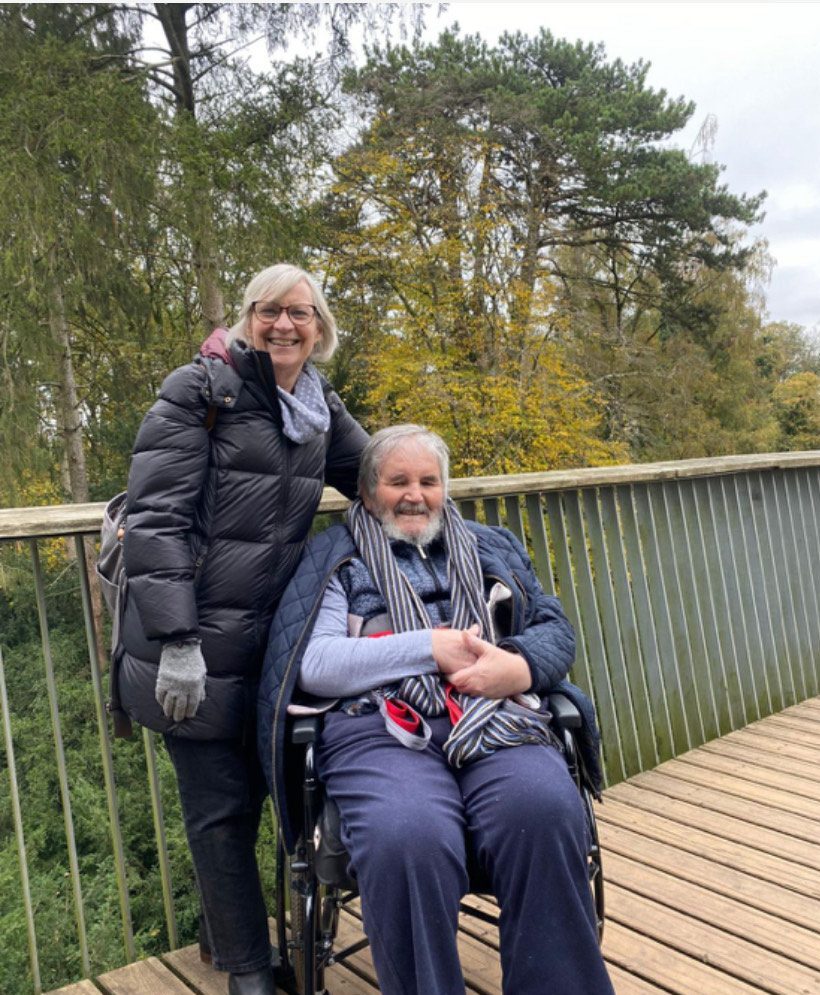
Maggie and Chris Chapman have always taken on life together, the good times, the big decisions, and any challenges. When Chris was diagnosed with PSP in 2021, Maggie suddenly found herself leading decisions they would normally have made as a team.
Her practical nature helped her navigate the diagnosis, especially because she had already heard of PSP after reading about John Attenborough’s experience. “When the consultant said Chris had PSP, pointing out the hummingbird shape on his scan, I said, ‘yes, I know.’ Having seen the symptoms in John Attenborough’s story, on some level, it was a diagnosis I was expecting.”
Making decisions alone sometimes felt overwhelming, from applying for benefits to sourcing quotes for building work. But Maggie stresses that she never truly felt alone, thanks to the support of their daughters, other carers and PSPA.
“After Chris’s diagnosis, there was so much to think about, so much to do. It can feel like a lot, on top of the day-to-day care. The carers I’ve met through PSPA have been invaluable though. If I have a question or a challenge, I can turn to our WhatsApp group or meet other Carers I’ve met through PSPA for a cuppa and get answers and understanding (and importantly relax and share a laugh) from people who really ‘get it’. Professionals can help with many things, but they don’t always understand the day‑to‑day impact. Other carers do.”
Peer support from the monthly PSPA Carers group and via the online forum, Health Unlocked, has helped with countless practical decisions, including around Chris’s deteriorating swallowing. “There’s no rule book for PSP. When pureeing meals didn’t work and mincing wasn’t enough, carers suggested adapting meals to suit our situation. Now I chop up the minced meals, so it is something that is in between minced and moist and pureed and serve with extra sauce or gravy, which works well. That advice was vital. People living through it just understand.”
With support from their local palliative care team, Maggie and Chris were also guided through the application for Continuing Healthcare (CHC) funding. This now provides regular carer support in the home, taking daily pressure off Maggie. “Having carers come in has been transformational though I have to admit it was something else to get used to, we were quite resistant to it initially”. It has however given Maggie her own life back, “It was sad to give up much of the social side of my life to care for Chris. Having extra carer visits has enabled me to rejoin my walking group, which helps my physical, emotional and mental health, and is a ‘bridging’ activity. On another Carers afternoon, I have space to visit some of our grandchildren.
The couple also completed a major home adaptation, converting their garage into an accessible bedroom and wet room and extending the front of the house. “Initially we had a bed in the living room but there wasn’t enough space for that long term. The garage conversion was a big project that took more than six months, but I’m so glad we did it,” says Maggie. “It works well and although it was daunting leading the decisions, I still ensured I involved Chris, getting him to choose the bathroom suite and curtains.”
Communication has become increasingly difficult as Chris has lost the ability to speak, but the family found a creative solution. “It is difficult not being able to speak to your partner. Speech Therapy supplied us with some amazing kit, but it was too late to be of any use to us, which they felt too. We adapted dog training buttons that our daughter had found online. Our grandchildren recorded short messages like, ‘I need a drink, or ‘I need the loo’ (the requests sound so much better when they say it!). Maggie has since shared the dog training buttons idea with other carers, hoping it may help someone else.
Reflecting on her journey, she says: “I don’t know what I would do without the support I’ve had from PSPA and the carers I’ve met. Their insight, encouragement and shared experience have been truly invaluable.”